Manhole Geysers Erupt Across Chicago as Storms Overwhelm Sewers Again
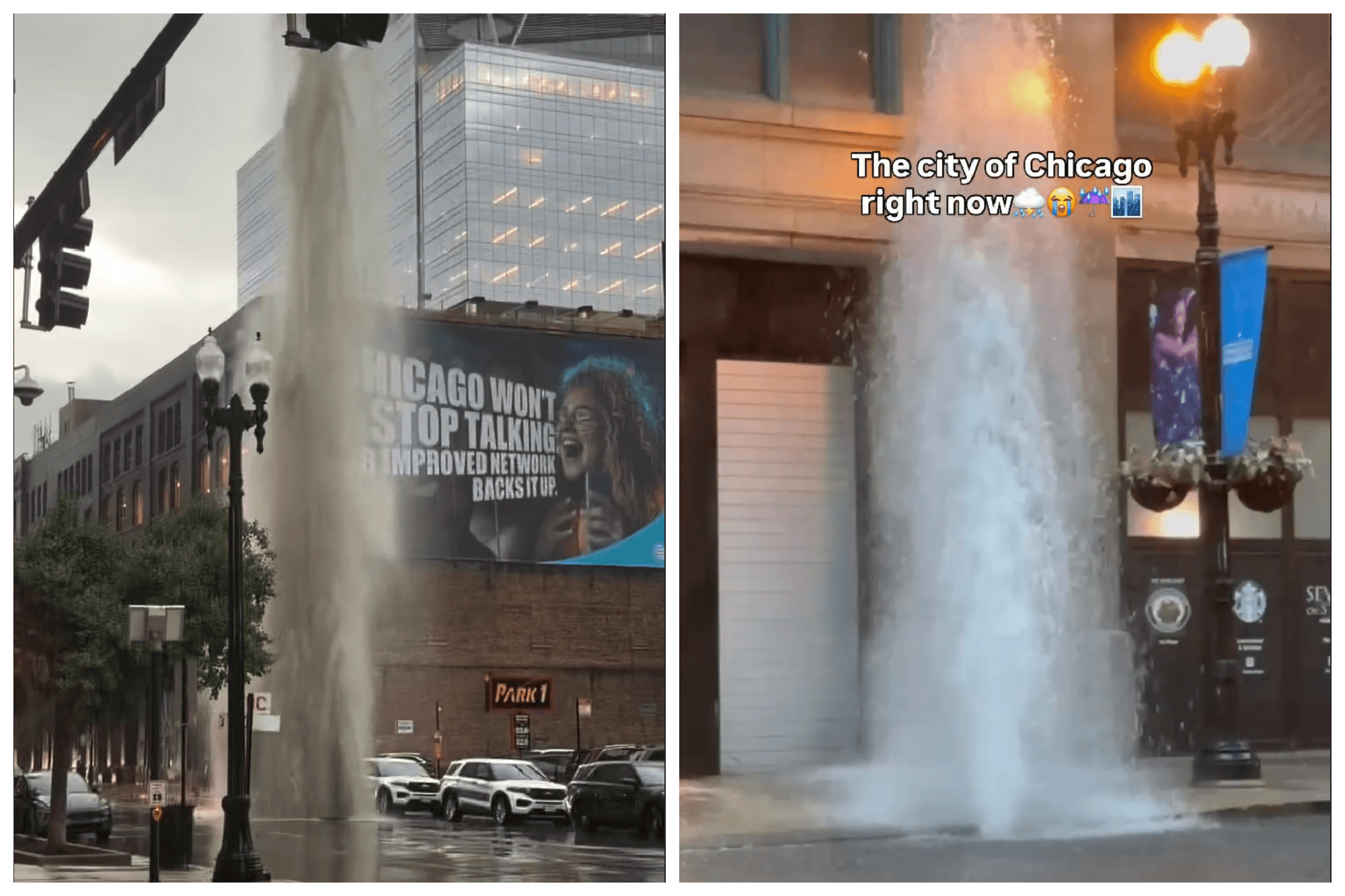
Water shot several feet into the air from manhole covers on Randolph Street, Jefferson Street and Blue Island Avenue on Monday afternoon, sending water across stretches of downtown and Pilsen streets.
The geysers came as a fast-moving line of thunderstorms dumped as much as three inches of rain on parts of Chicago in a short window Monday, July 27. The storm flooded basements, knocked out power to thousands of customers and turned videos of manholes blowing their covers into the most shared images of the day. Clips posted to Instagram and TikTok showed the covers popping loose and water shooting upward, sometimes for several seconds, as pedestrians and drivers watched.
It wasn't the first time Chicagoans have seen this happen. Similar footage has surfaced during past summer storms, and each time it spreads online, the same question comes up: is this becoming a regular part of Chicago summers, or a one-time result of an unusually intense storm?
The mechanics behind the phenomenon are straightforward. Much of Chicago runs on a combined sewer system, meaning stormwater and wastewater flow through the same pipes on their way to treatment. When a storm dumps several inches of rain in under an hour, as Monday's did, the volume of water entering that shared network can outpace what the pipes can carry. Air trapped in the lines gets compressed as water rushes in behind it, and with nowhere else to go, that pressure can push a manhole cover loose and send water shooting upward.
Chicago has relied on the Deep Tunnel and Reservoir Plan, the underground system built by the Metropolitan Water Reclamation District to capture overflow and reduce flooding and pollution, for decades. The project, one of the largest civil engineering efforts in the country when construction began in the 1970s, was designed to store billions of gallons of stormwater until treatment plants can process it. But even that system has limits, and repeated storms this summer have tested them. When downpours arrive in bursts rather than steady rain, and three inches falls in an hour rather than spread across a day, the tunnels and reservoirs can fill faster than they can drain.
Monday's storm caused widespread street flooding across the city, downed trees in several neighborhoods and left residents without power as utility crews worked to restore service. The manhole eruptions were the most visible sign of the strain on the system, and video of jets of water bursting from the pavement in the middle of the Loop, feet from office buildings and bus stops, spread quickly online.
For residents who have watched similar videos appear in recent summers, the pattern raises a practical concern. Chicago's sewer infrastructure was largely built for a climate that delivered rain differently than it does now. Heavier, more concentrated bursts of rain, the kind meteorologists have linked to a warming atmosphere that holds more moisture, put more strain on pipes and pumping stations sized for an earlier era's storm patterns. A geyser shooting out of a manhole shows that the system underneath the street reached its capacity, at least in that spot, at that moment.
The city has invested in gray and green infrastructure over the years, including permeable pavement pilots, rain gardens and sewer upgrades in flood-prone areas, meant to absorb more stormwater before it reaches the pipes. Those projects have moved slowly and unevenly across neighborhoods, and they haven't stopped flooding during the heaviest storms this summer. Basements in flood-prone blocks continue to take on water nearly every time a major storm rolls through, and Monday was no exception.
No injuries were reported from the manhole incidents Monday, and the eruptions stopped once the heaviest rain passed and the system had a chance to drain. Another round of summer storms is expected before the season ends, and the Metropolitan Water Reclamation District's tunnels and reservoirs, built and expanded over more than a century, will face the same test again.